
Lifting Belts & Weightlifting Shoes
November 3, 2022

Welcome to the Blog
Hey, I'm Laurie
Consider me your go-to gal for all things fitness, nutrition, and healthy lifestyle.

free resources
Your irresistible freebie offer title here
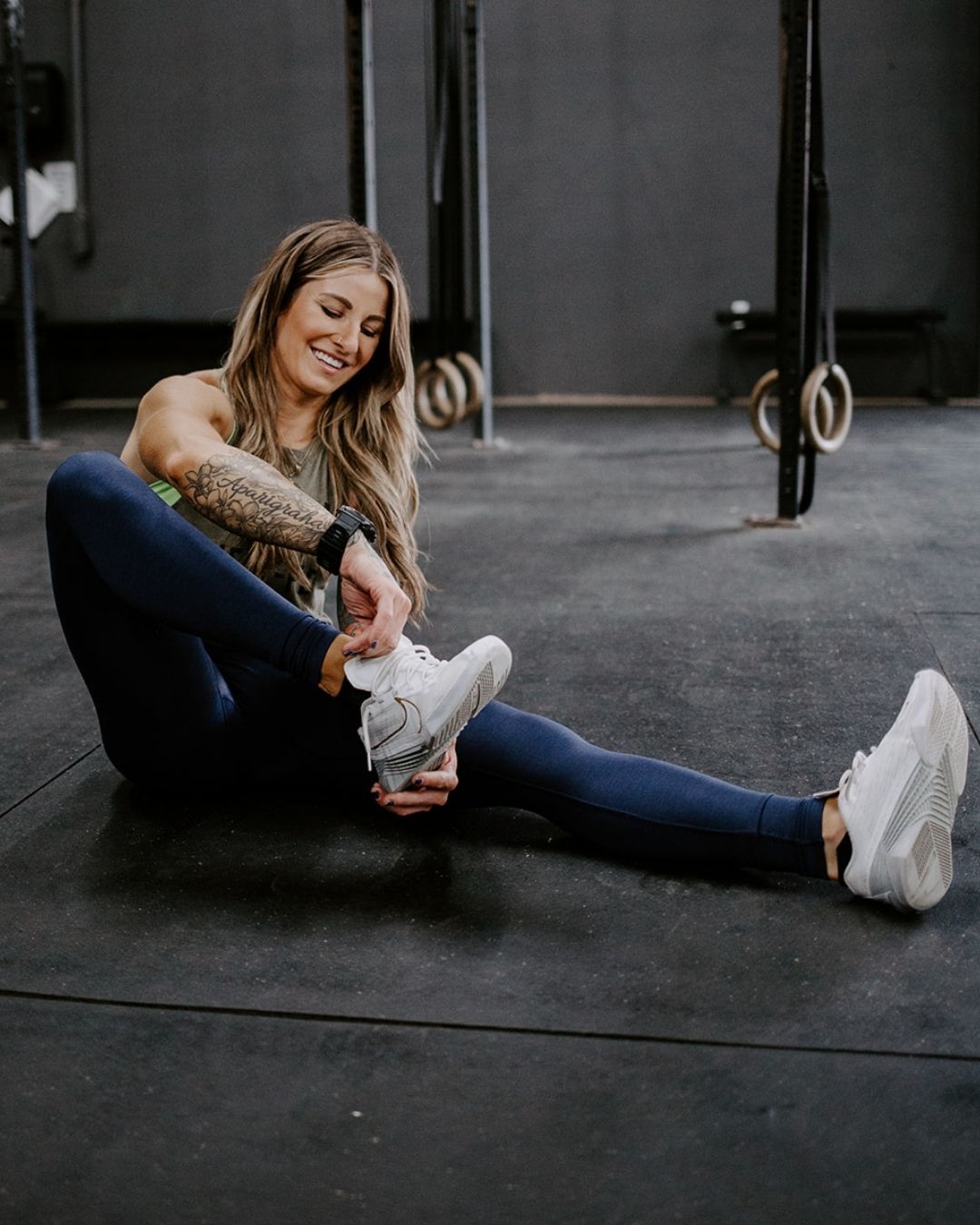
Special Shoes for Lifting?
One of the most common mistakes we see in the gym is people lifting in running shoes or shoes that have big, squishy, super cushioned, or uneven bottoms.
Think of this kinda like if you strapped bedroom pillows to the bottom of your feet: you probably wouldn’t want a super squishy and unstable surface to stand on while you’re tossing around heavy weight and pushing your body to it’s limits, right? (:
Ideally we want to be lifting in shoes that have a sturdy and flat bottom and have a wider toe box (so that your toes aren’t all jammed together). Popular workout shoes include Reebok Nanos, No Bull Project Trainers, and Nike Metcons.
I’ve never really been a Reebok gal, but I do love the No Bull Project High Tops and Nike Metcons (especially the Nike Metcon Reacts!). You could also wear more simple shoes like Chucks, Converse, etc as well – just depends on your style and shoe preference!
Weightlifting Shoes
Aside from general training shoes, there’s also Weightlifting Shoes, such as Reebok Legacy Lifters, Nike Romaleos, TYR Lifters, etc. These are sturdy shoes with a flat bottom and an internal raised heel that we could use when Olympic Weightlifting (Snatch, Clean and Jerk), Squatting, etc. Just make sure not to deadlift in them!
This internal heel within the weightlifting shoe helps increase ankle mobility. Overall, the purpose of weightlifting shoes is simply to provide better stability and positioning while you’re lifting heavy weight and moving through very dynamic movements.
If you’re still in your first 1-2 years of lifting and strength training, having special weightlifting shoes are likely unnecessary.
It might be better to focus your attention the first few years of lifting on:
- improving hip, ankle, front rack, and overhead mobility
- mastering movements, lifts, and proper mechanics
- learning how to properly breathe and brace during your lifts
This is because weightlifting shoes can absolutelyyy be used as a very effective bandaid to bypass poor mobility, movement patterns, and/or technique. Which can lead to increased risk of injury, and also lead to us making bad lifting habits that can be hard to break.
You know that saying “ego is the enemy?” Sooner or later, you’re likely going to stall and plateau on making progress with your lifts due to poor mobility or the bad lifting technique that should have been addressed when you first got started.
As someone that’s been coaching fitness since 2008, I promise there’s nothing worse than having a few years of lifting experience under your belt and then having to start back at square one to re-learn the basics. So maybe hold off on the shoes until you’re “earned” them and have decent mobility and movement patterns (:
When to Use Weightlifting Shoes
- Once you have 1-2 or more years lifting experience
- When drilling technique and/or lifting over 80-85% (or more) of your 1 Rep Max
- When performing: Snatches, Clean and Jerks, Back Squats, Front Squats, Overhead Squats, Snatch Balances, Push Presses, Push Jerks, Split Jerks …
As you can see above: at whatever point you do buy lifting shoes, you also probably shouldn’t be wearing them 24/7/365 during workouts. Generally, you’re likely be wearing flat training shoes for majority of your sessions, and then could consider popping on your weightlifting shoes when/where appropriate.
When to Use Lifting Belts
Just like weightlifting shoes, lifting belts are simply a tool that may provide a little extra support, stability, and security when moving heavy weights. Put simply: wearing a lifting belt may help you lift a little more weight than if you weren’t wearing a belt.
I’d actually give very similar advice as I did above in regards to not wearing a belt while lifting until you have a few years of lifting experience under your belt.
You also don’t need to slap on a belt the second you walk in the gym and start your training session.
It’s important for things like lifting belts and shoes to be *tools* that we only sometimes (rather than emotional support items where we “can’t lift” without them). A great rule of thumb might be to not use a lifting belt unless lifting over ~80-85% or more of your 1-Rep Max.
There’s tons of brands out there, but I’ve been a loyal fan to 2Pood Performance Belts for well over a decade now. They have tons of different sizes, colors, designs, etc. If you’ve ever seen me rocking a sparkly purple belt in my lifting videos, it’s from 2Pood (:Big Takeaways
- Weightlifting shoes and weightlifting belts are tools that can be used during workouts and training sessions to help you lift more weight
- Consider not using lifting shoes or belts until 1-2 years or more of lifting and/or after you’ve put in time working on improving mobility, lifting technique, you’ve learned how to properly breathe and brace, etc
- Consider only using Shoes/Belts when lifting weights that are ~80-85% or more of your 1-Rep Max
Need a good workout program?
If you’re new around these parts, welcome! My name is Laurie and I’m a nutrition and fitness coach who founded the world-famous online workout company, Paragon Training Methods.
We have thousands of members around the globe and our known for our life-changing workouts, coaching, and online fitness community. Read more about Paragon and what we do! ♥️
ready to take the leap?
we've changed
over 20,000+ lives with our unique approach to fitness
come get strong with us
featured posts

This web site offers health, wellness, fitness, exercise, and nutritional information and is provided for informational purposes only. This information is not intended as a substitute for the advice provided by your physician or other healthcare professional. You should not rely on this information as a substitute for, nor does it replace, professional medical advice, diagnosis, or treatment. Speak with your physician or healthcare professional before implementing any new nutrition advice, supplements, etc. If you have or suspect that you have a medical problem, please contact your health care provider promptly. Do not disregard professional medical advice or delay in seeking professional advice because of something you have read on this website. The use of any information provided on this website is solely at your own risk. Nothing stated or posted on this web site or available through any services offered by Laurie Christine Tongate, Paragon Training Methods, lauriechristinetongate.com, or paragontrainingmethods.com are intended to be, and must not be taken to be, the practice of medicine.
© 2026 Laurie Christine Tongate. All Rights Reserved. Template Customized by Brandt Creative Co. | Privacy Policy | Terms